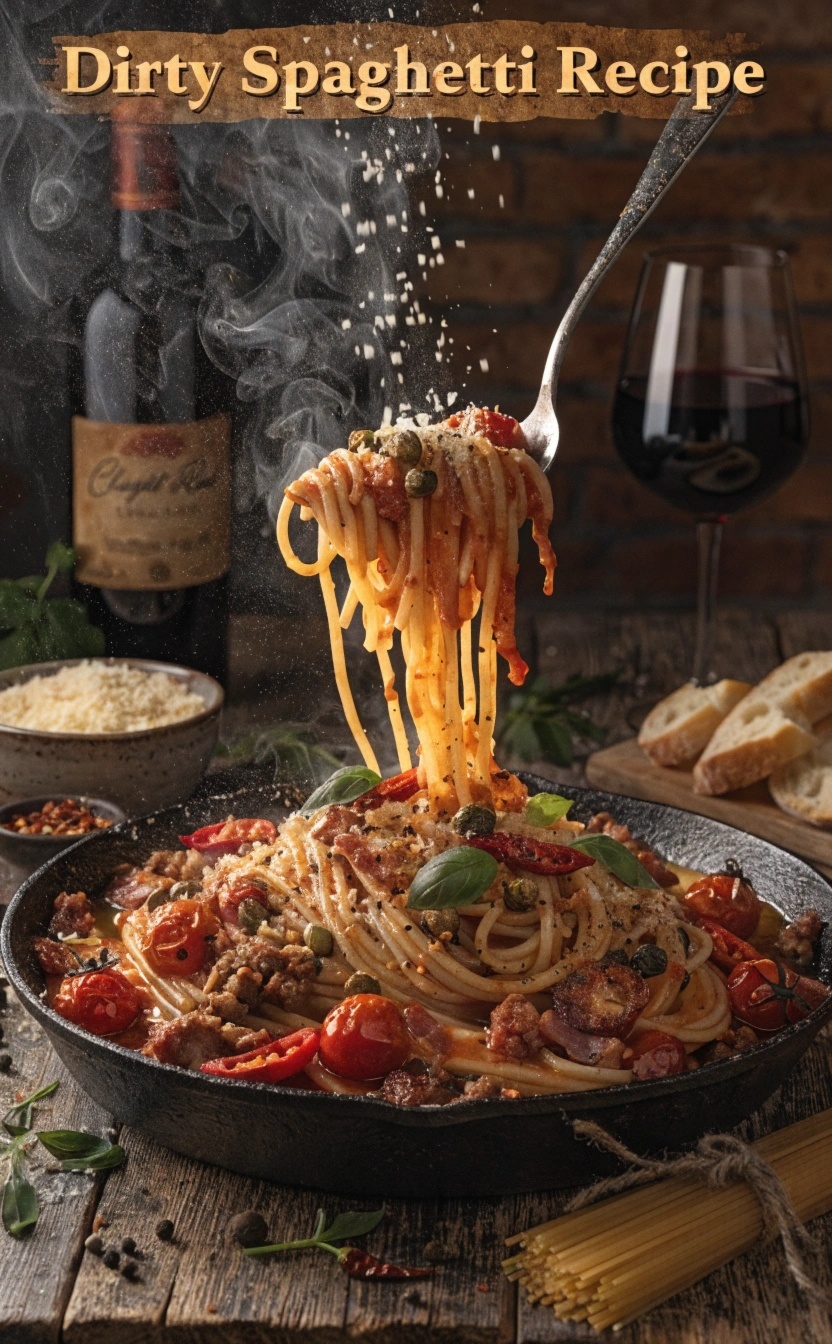
Dirty Spaghetti Recipe — The Bold, Unapologetically Delicious Pasta That Belongs in Your Weekly Rotation
Some recipes play it safe. They stay in familiar territory, follow established rules, and produce something perfectly acceptable that nobody really talks about once the plates are cleared. And then there’s dirty spaghetti — the pasta dish that abandons caution entirely and comes out on the other side tasting like the best decision you’ve made all week. If you’ve never heard of it, you’re about to wonder how you managed without it. If you’ve tasted it once at someone else’s table and spent weeks trying to recreate that exact flavor — this is the guide you’ve been searching for.
Dirty spaghetti is everything a genuinely great pasta dish should be: bold, deeply savory, layered with texture, and built from the kind of ingredients that make a kitchen smell so good people wander in from other rooms to investigate. It’s the weeknight dinner that feels like a weekend indulgence, the recipe that earns you real compliments without requiring culinary training. This guide gives you the full recipe, the technique, the variations, and every secret that makes each bowl genuinely unforgettable.
What Is Dirty Spaghetti — And Why Is Everyone Making It?
The Story Behind the Dirty Spaghetti Recipe
The word “dirty” in cooking has its roots in Southern American cuisine — specifically dirty rice, where the dish gets its name from the deeply flavored, ingredient-packed result of cooking proteins, aromatics, and seasonings together in one vessel without holding anything back. That same philosophy applies directly to dirty spaghetti.
What sets this dish apart from everything else in the pasta universe is its maximalist approach. Where traditional pasta follows rules about restraint and simplicity, the dirty spaghetti recipe throws those rules out and builds flavor through layering, fat retention, and bold seasoning at every stage.
| Feature | Regular Spaghetti | Dirty Spaghetti Recipe |
|---|---|---|
| Protein | Single (beef or pork) | Multiple (sausage, bacon, beef) |
| Sauce base | Tomato-forward | Tomato + meat drippings |
| Seasoning level | Moderate | Bold and deeply layered |
| Cooking method | Separate sauce | Everything cooked together |
| Flavor profile | Clean, classic | Smoky, complex, deeply savory |
| Cleanup | Multiple pots | Mostly one pan |
The dish has gained significant traction across food communities on social media — and once you understand what it actually is, the popularity makes complete sense.
Ingredients for the Best Dirty Spaghetti Recipe
Why the Ingredient Combination Matters
The power of this recipe comes from using multiple proteins together. Each one contributes something different — bacon renders smoky fat that becomes the flavor foundation, Italian sausage brings seasoned depth, and ground beef provides body and richness. Remove any one of them and the dish is still good. Keep all three and it’s something else entirely.
Complete Ingredient Table
| Ingredient | Amount | Notes |
|---|---|---|
| Spaghetti | 400g (14 oz) | Or linguine, fettuccine |
| Italian sausage, casing removed | 250g (9 oz) | Hot or mild |
| Smoked bacon or pancetta | 150g (5 oz) | Diced small |
| Ground beef | 200g (7 oz) | 80/20 fat ratio |
| Yellow onion | 1 large | Finely diced |
| Garlic cloves | 6–8 cloves | Minced generously |
| Red bell pepper | 1 large | Diced |
| Cherry tomatoes | 1 cup | Halved |
| Crushed tomatoes (canned) | 400g (14 oz) | San Marzano preferred |
| Tomato paste | 2 tbsp | Flavor concentration |
| Chicken or beef stock | ½ cup | Depth and body |
| Dry red wine | ½ cup | Optional but recommended |
| Olive oil | 2 tbsp | For aromatics |
| Red pepper flakes | 1–2 tsp | Adjustable |
| Smoked paprika | 1 tsp | Smoky depth |
| Dried oregano | 1 tsp | Herb base |
| Fresh basil | Large handful | Added at the end |
| Parmesan cheese | ½ cup, grated | For finishing |
| Salt and black pepper | To taste | Season throughout |
| Reserved pasta water | 1 cup | Sauce emulsification |
Optional Add-Ins to Customize Your Dish
- 🍄 Sliced mushrooms — adds earthy depth and meaty texture
- 🫒 Kalamata olives — briny contrast against the rich meat sauce
- 🧀 Ricotta dollops — creamy contrast swirled through before serving
- 🥬 Baby spinach — wilts into the sauce for added nutrition
- 🥓 Nduja — spreadable spicy salami for next-level heat and complexity
- 🧅 Caramelized onions — slow-cooked sweetness that deepens the base
Step-by-Step Dirty Spaghetti Recipe Instructions
Before You Start — Prep Checklist
The dirty spaghetti recipe moves quickly once it’s underway, so having everything ready before you heat the pan is essential. Experienced cooks call this mise en place — everything in its place — and it’s the single habit that separates a stressful cooking experience from a smooth one.
- Dice onion, mince garlic, and chop bell pepper before anything else touches the heat
- Remove sausage from casings and crumble into a bowl
- Dice bacon into small, uniform pieces for even fat rendering
- Halve cherry tomatoes and measure all dried spices into one small bowl
- Open canned tomatoes and measure stock and wine — have both ready beside the stove
- Set a large pot of heavily salted water to boil alongside your skillet
- Grate Parmesan and tear fresh basil — set both aside for finishing
Stage 1 — Building the Flavor Foundation
This is where the “dirty” magic actually begins. The fat rendered from your bacon becomes the cooking medium for everything that follows — do not skip it, do not drain it.
- Heat a large, wide skillet over medium-high heat with no oil
- Add diced bacon and cook until the fat renders and the edges turn golden — approximately 5–6 minutes
- Remove bacon with a slotted spoon and set aside — leave every drop of fat in the pan
- Add crumbled Italian sausage to the bacon fat — cook until deeply browned, breaking into small pieces throughout
- Add ground beef — season with salt and pepper, cook until no pink remains
- Keep all the fat in the pan — this is your flavor base and the defining quality of a proper dirty spaghetti recipe
- Remove all meat from the pan and set aside with the bacon
Stage 2 — The Aromatic Base
- Add olive oil to the same pan alongside the remaining meat drippings
- Add diced onion and cook over medium heat for 4–5 minutes until soft and translucent
- Add minced garlic and diced red bell pepper — cook 2–3 minutes until the garlic is fragrant
- Add tomato paste directly to the vegetables — stir constantly and cook for 2 minutes to caramelize it
- Add smoked paprika, red pepper flakes, and dried oregano — stir and cook one minute
- Deglaze with red wine — scrape every bit of fond from the bottom of the pan into the liquid
That fond — the browned bits stuck to the pan — is concentrated flavor. The wine lifts all of it back into the sauce, and nothing goes to waste.
Stage 3 — Building and Simmering the Sauce
- Return all cooked meats to the pan
- Add crushed tomatoes and halved cherry tomatoes — stir everything together
- Pour in your stock and bring the pan to a gentle simmer
- Reduce heat to medium-low and cook uncovered for 12–15 minutes, stirring occasionally
- Taste and adjust seasoning — more salt, pepper, or pepper flakes based on your preference
- While the sauce simmers, cook your spaghetti in boiling salted water to one minute under al dente
Stage 4 — Bringing It All Together
- Reserve one full cup of pasta cooking water before draining — this step is non-negotiable
- Drain spaghetti and add it directly to the sauce in the skillet
- Toss everything together over medium heat, adding splashes of pasta water as needed
- The starch in that water is what creates the glossy, clingy texture that makes this dish memorable
- Cook together for 1–2 minutes until the pasta finishes in the sauce rather than separately
- Remove from heat and fold in torn fresh basil
- Serve immediately with Parmesan and freshly cracked black pepper
Timing Guide
| Stage | Task | Time |
|---|---|---|
| Stage 1 | Render bacon and brown meats | 15 minutes |
| Stage 2 | Cook aromatics and caramelize paste | 8 minutes |
| Stage 3 | Build and simmer sauce | 15 minutes |
| Parallel | Cook spaghetti | 10–11 minutes |
| Stage 4 | Combine pasta and sauce | 5 minutes |
| Total | Full recipe | ~40–45 minutes |
Dirty Spaghetti Recipe Variations Worth Exploring
Spicy Version
Build heat in layers rather than adding it all at the end. Use hot Italian sausage as your base, increase red pepper flakes to 1.5–2 teaspoons, and consider adding a tablespoon of nduja when you return the meats to the pan. A small amount of honey stirred in at the end balances the heat without neutralizing it.
| Heat Level | Chili Source | Additional Elements |
|---|---|---|
| Mild | Red pepper flakes (½ tsp) | Standard recipe |
| Medium | Flakes (1.5 tsp) + hot sausage | Standard recipe |
| Hot | Fresh Calabrian chili + hot sausage | Add ½ tsp honey to balance |
| Very Hot | Nduja + fresh chili + flakes | Add ricotta to cool |
Vegetarian Dirty Spaghetti Recipe
You can achieve the same depth without any meat by leaning into umami-rich substitutes. Mixed mushrooms — cremini and shiitake together — provide meaty texture. Cooked lentils add body and protein. Double the smoked paprika, add a tablespoon of white miso paste, and a splash of soy sauce to the tomato base. Finish with smoked cheese instead of Parmesan for the smoky quality that meat drippings would normally provide.
| Substitute | Amount | Contribution |
|---|---|---|
| Mixed mushrooms | 400g | Meaty texture, umami |
| Cooked green lentils | 1 cup | Body and protein |
| White miso paste | 1 tbsp | Deep umami base |
| Smoked paprika (doubled) | 2 tsp | Smoky quality |
| Smoked cheese | ¼ cup | Finishing depth |
Creamy Dirty Spaghetti Recipe
Add half a cup of heavy cream or three tablespoons of mascarpone to the finished sauce in the final five minutes of simmering. Increase the Parmesan quantity to three-quarters of a cup and add a small pinch of nutmeg. The result is a rose-toned sauce that’s simultaneously richer and mellower — the kind of variation you make when you want the boldness of dirty spaghetti with slightly softer edges.
Expert Tips for Consistently Great Results
- 🥓 Never drain the fat — the rendered fat from bacon and sausage is the entire flavor foundation
- 🍝 Save your pasta water — the starch content is irreplaceable for sauce texture and consistency
- 🧄 Use more garlic than feels reasonable — this dish handles it without hesitation
- 🍷 Deglaze properly — the fond at the bottom of the pan is concentrated flavor you cannot afford to waste
- ⏰ Don’t rush the simmer — the sauce needs time to concentrate and develop its full character
- 🧂 Season every layer — at the meat stage, the vegetable stage, and the sauce stage separately
Common Mistakes to Avoid
| Mistake | The Problem | The Fix |
|---|---|---|
| Draining meat fat | Loses the foundational flavor entirely | Keep fat in pan throughout |
| Overcooking garlic | Bitter, sharp flavor corrupts the base | Add only after onions are fully soft |
| Hard-boiling the sauce | Splits tomato, creates harsh acidity | Maintain a gentle simmer throughout |
| Skipping pasta water | Thin sauce that slides off pasta | Always reserve before draining |
| Rushing browning | Grey, steamed meat instead of seared | Cook in batches if the pan is crowded |
Storing and Reheating
| Method | Container | Duration | Reheating |
|---|---|---|---|
| Refrigerator | Airtight container | 3–4 days | Skillet with splash of stock |
| Freezer (sauce only) | Sealed freezer bag | Up to 3 months | Thaw overnight, reheat gently |
| Meal prep | Sauce separate from pasta | 4 days | Cook fresh pasta, reheat sauce |
The flavor of this sauce genuinely improves after a night in the refrigerator. If you can make the sauce component ahead, do it — the difference is noticeable.
Frequently Asked Questions About the Dirty Spaghetti Recipe
What exactly is a dirty spaghetti recipe?
A dirty spaghetti recipe is a bold, ingredient-rich pasta built on the same philosophy as Southern dirty rice — multiple proteins cooked together in one pan, with rendered fat retained as the flavor base. The result is far more complex and deeply savory than a standard meat sauce.
Can I make the dirty spaghetti recipe with just one type of meat?
Yes — Italian sausage alone produces excellent results because of its built-in seasoning profile. The triple-protein combination creates the deepest flavor, but a single well-browned protein with retained fat still produces a satisfying dirty spaghetti result.
How spicy is a typical dirty spaghetti recipe?
Heat level is entirely within your control. Standard red pepper flakes at one teaspoon gives warmth without aggression. Scale up with hot sausage, fresh Calabrian chili, or nduja for genuine heat, or reduce the flakes for a family-friendly version.
Can I make the dirty spaghetti recipe ahead of time?
The sauce component improves overnight and can be made up to three days in advance. Store refrigerated and cook fresh pasta on the day of serving — this produces significantly better results than storing assembled pasta.
What pasta shape works best for a dirty spaghetti recipe?
Spaghetti is traditional, but linguine, fettuccine, rigatoni, and pappardelle all work beautifully. Ridged pasta shapes like rigatoni catch the chunky meat sauce particularly well if you prefer more sauce contact per bite.
Is a dirty spaghetti recipe the same as Bolognese?
They share a tomato and meat base, but the similarities end there. Bolognese is slow-cooked for hours with milk for a delicate, refined result. Dirty spaghetti is faster, bolder, uses multiple proteins including bacon, and leans heavily into spice and smokiness. It’s more maximalist in every respect.
The Pasta Dish That Changes Your Weeknight Cooking
A great dirty spaghetti recipe doesn’t ask much of you — a wide skillet, about 45 minutes, and the willingness to leave the fat in the pan. What it gives back in return is a bowl of pasta that tastes like it came from somewhere with a serious reputation, made entirely in your own kitchen with ingredients you can find at any grocery store.
Make the classic version first. Get comfortable with the technique and the way the flavor builds stage by stage. Then try the spicy variation, explore the creamy version, or go vegetarian when the mood calls for something lighter. The foundation stays the same — it’s the kind of recipe that rewards you every time you return to it.