3 Pancake Styles Everyone Should Know: Souffle, Thick Fluffy & Light Thin Pancakes
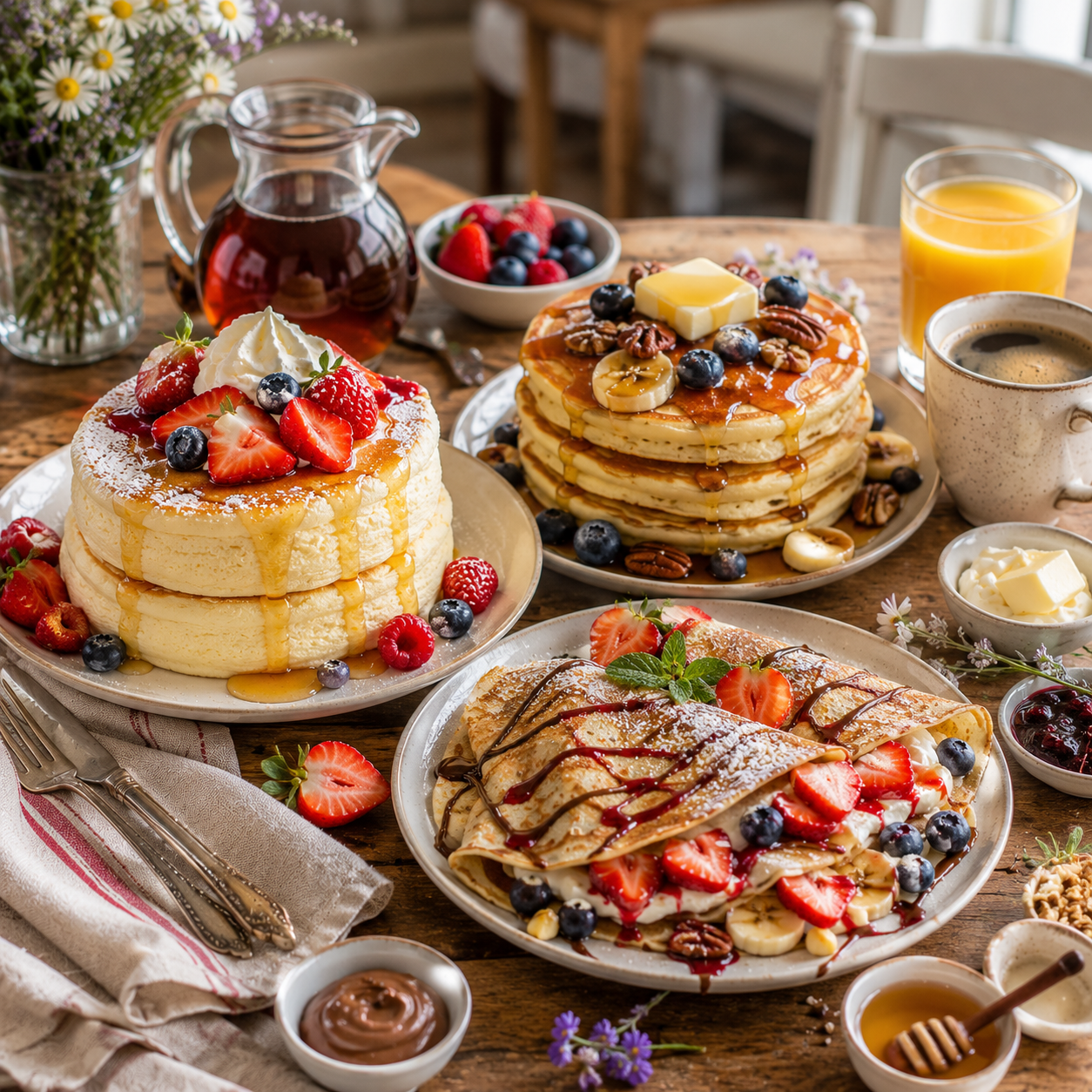
There’s a reason a slow weekend morning so often revolves around a stack of pancakes on the table. But not every pancake craving is the same — sometimes you want something jiggly and delicate, sometimes a thick, cozy stack, and sometimes a thin, light pancake you can fold or roll. This guide covers all three: souffle pancakes, thick fluffy pancakes, and light thin pancakes, each with its own recipe and technique.
By the end, you’ll know exactly how to make all three styles, and which one fits the mood you’re craving.
Why Pancake Texture Matters
The difference between these three pancake styles comes down almost entirely to ingredient ratios and technique. Whipped egg whites create the airy, jiggly structure of souffle pancakes. Buttermilk and a thicker batter create the classic tall, fluffy stack. A thinner, egg-forward batter creates the light, delicate texture of thin pancakes that can be folded or rolled.
Matching the right style to the occasion makes all the difference — a lazy weekend calls for something different than a quick weekday breakfast or a special brunch centerpiece.
Pancake Basics – Tools & Tips Before You Start
| Tool | Recommended Choice | Notes |
|---|---|---|
| Non-stick skillet or griddle | Medium size | Even heat distribution matters most |
| Electric mixer | Hand or stand mixer | Especially important for whipping egg whites |
| Rubber spatula | Flexible, wide | For gentle folding and flipping |
| Ring molds (optional) | 3–4 inch metal rings | Helps souffle pancakes hold their tall shape |
Always let batter rest for a few minutes before cooking, and keep your pan at a moderate, consistent temperature to avoid burning the outside before the inside cooks through.
3 Pancake Styles
1. Souffle Pancakes (Japanese-Style)
| Ingredient | Amount |
|---|---|
| Egg yolks | 2 |
| Egg whites | 2 |
| Sugar | 2 tbsp |
| All-purpose flour | 1/4 cup |
| Baking powder | 1/4 tsp |
| Milk | 2 tbsp |
Whip egg whites with sugar to stiff peaks. Separately mix yolks, flour, baking powder, and milk into a smooth batter. Gently fold the whipped whites into the yolk mixture in batches. Cook in a covered pan over low heat, using ring molds if available, flipping carefully once golden on the bottom.
2. Thick Fluffy Pancakes (Classic American-Style)
| Ingredient | Amount |
|---|---|
| All-purpose flour | 1.5 cups |
| Sugar | 2 tbsp |
| Baking powder | 1 tbsp |
| Buttermilk | 1.5 cups |
| Egg | 1 large |
| Butter, melted | 3 tbsp |
Whisk dry ingredients together, then combine buttermilk, egg, and melted butter separately. Mix wet into dry until just combined, leaving small lumps. Cook on a medium-hot griddle, flipping once bubbles form and set around the edges.
3. Light Thin Pancakes (Crepe-Style)
| Ingredient | Amount |
|---|---|
| All-purpose flour | 1 cup |
| Eggs | 2 |
| Milk | 1.25 cups |
| Butter, melted | 2 tbsp |
| Salt | Pinch |
Whisk all ingredients together until completely smooth and thin, similar to heavy cream in consistency. Pour a small amount into a hot, lightly buttered pan, swirling to coat thinly. Cook briefly on each side until lightly golden.
Side-by-Side Comparison Table
| Style | Texture | Cook Time per Batch | Difficulty |
|---|---|---|---|
| Souffle Pancakes | Jiggly, airy, tall | 10–12 minutes | Moderate–Advanced |
| Thick Fluffy Pancakes | Dense, soft, tall stack | 3–4 minutes | Easy |
| Light Thin Pancakes | Delicate, foldable | 1–2 minutes | Easy |
Tips for Getting Each Style Right
- For souffle pancakes, whip egg whites to stiff, glossy peaks and fold gently to preserve as much air as possible.
- For thick fluffy pancakes, don’t overmix the batter — a few lumps ensure a tender, airy crumb rather than a dense one.
- For light thin pancakes, the batter should pour easily and spread thinly across the pan without needing to be pushed.
- Keep pan temperature moderate for all three styles — too hot browns the outside before the inside finishes cooking.
Customization Ideas
| Topping | Best Paired With |
|---|---|
| Fresh berries and whipped cream | Souffle Pancakes, Thick Fluffy Pancakes |
| Maple syrup and butter | Thick Fluffy Pancakes |
| Nutella and sliced banana | Light Thin Pancakes |
| Powdered sugar dusting | All three styles |
For dietary adjustments, a 1:1 gluten-free flour blend works in all three recipes, and dairy-free milk and butter alternatives can be substituted without major changes to technique.
Common Mistakes to Avoid With Each Pancake Style
- Deflating the whipped egg whites when folding, which prevents souffle pancakes from rising properly.
- Overmixing thick fluffy pancake batter, resulting in a dense, tough texture instead of a light one.
- Making the batter too thick for light thin pancakes, which prevents it from spreading evenly in the pan.
- Using pan heat that’s too high, which burns the outside before any of the three styles finish cooking through.
Creative Ways to Serve Your Pancakes
- A brunch centerpiece featuring all three styles side by side
- A layered pancake “cake” using thick fluffy pancakes stacked with cream and fruit
- Light thin pancakes rolled with a sweet or savory filling
- A weekend breakfast tradition rotating between styles each time
FAQ – Pancake Styles
What makes souffle pancakes different from regular pancakes? Souffle pancakes get their tall, jiggly texture from whipped egg whites folded into the batter, unlike regular pancakes that rely mainly on baking powder for rise.
What is the secret to thick, fluffy pancakes? Using buttermilk and avoiding overmixing the batter are the two biggest factors in achieving a tall, tender, fluffy texture.
How do you make pancakes thin and light? A thinner batter with a higher ratio of eggs and milk to flour, similar to a crepe batter, creates thin, light pancakes that cook quickly.
Can these pancake recipes be made gluten-free? Yes — a 1:1 gluten-free flour blend can be substituted in all three recipes without major changes to the method.
Why do my pancakes turn out flat instead of fluffy? This is usually caused by overmixing the batter, using expired baking powder, or cooking at too low a temperature to activate the rise properly.
Conclusion
Whether you’re in the mood for something jiggly and delicate, tall and cozy, or thin and foldable, these three pancake styles cover every craving with a clear, tested method for each. Once you understand what makes each one unique, switching between them becomes second nature.
Now it’s your turn: pick a style from the list, heat up your pan, and give it a try this weekend. Once you’ve made one, save this guide for your next breakfast, and share which pancake style became your new favorite.